
Customers have to phone you to get a price.
A site earns its money at one moment: when somebody who is ready to spend finds the answer they came for. Most small-business sites lose people exactly there, and it is usually a ten-minute problem rather than a redesign.
Those are policy, not estimates. The audit gives you a real figure for your situation before you spend anything.
Say what you do, where, and roughly what it costs.
Three questions, and the number of small-business sites that answer all three is smaller than you would think. Everything else on a site — the photography, the copy, the clever bit at the top — is downstream of getting those right.
- Loads fast on a phone on a bad connection in a truck
- A form that reaches your phone, with a record of who filled it in
- Photos of your real work, compressed so they don't eat a data plan
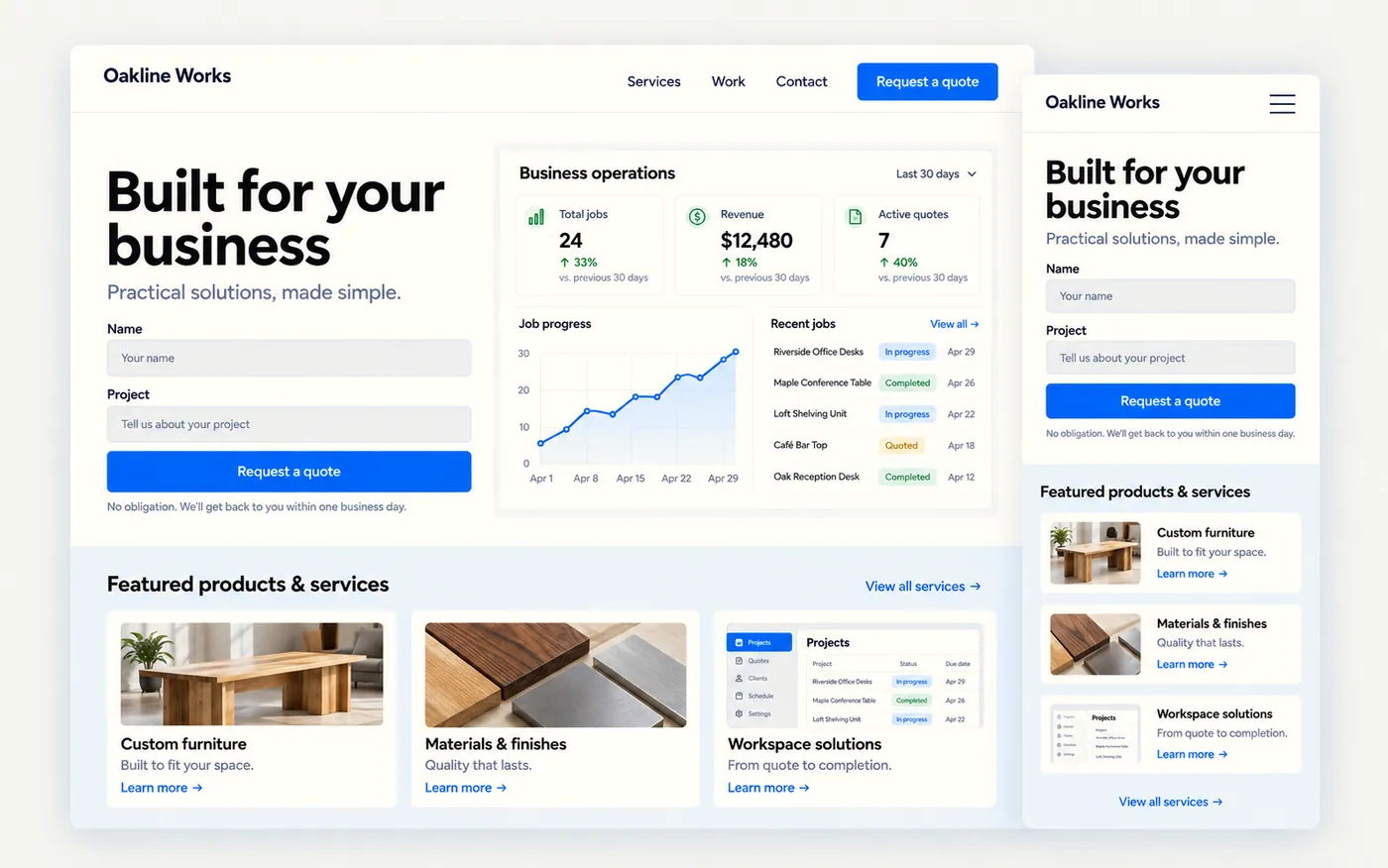
Let people price the job themselves.
For anything configurable — printing, signage, framing, cabinetry — a customiser turns a phone call nobody makes into a request with the artwork, the quantities and the deadline already attached.
- Pick the options, see it, see the price
- Upload artwork or measurements with the request
- You get a job you can start, not a question you have to answer

A site that asks, or a store that sells.
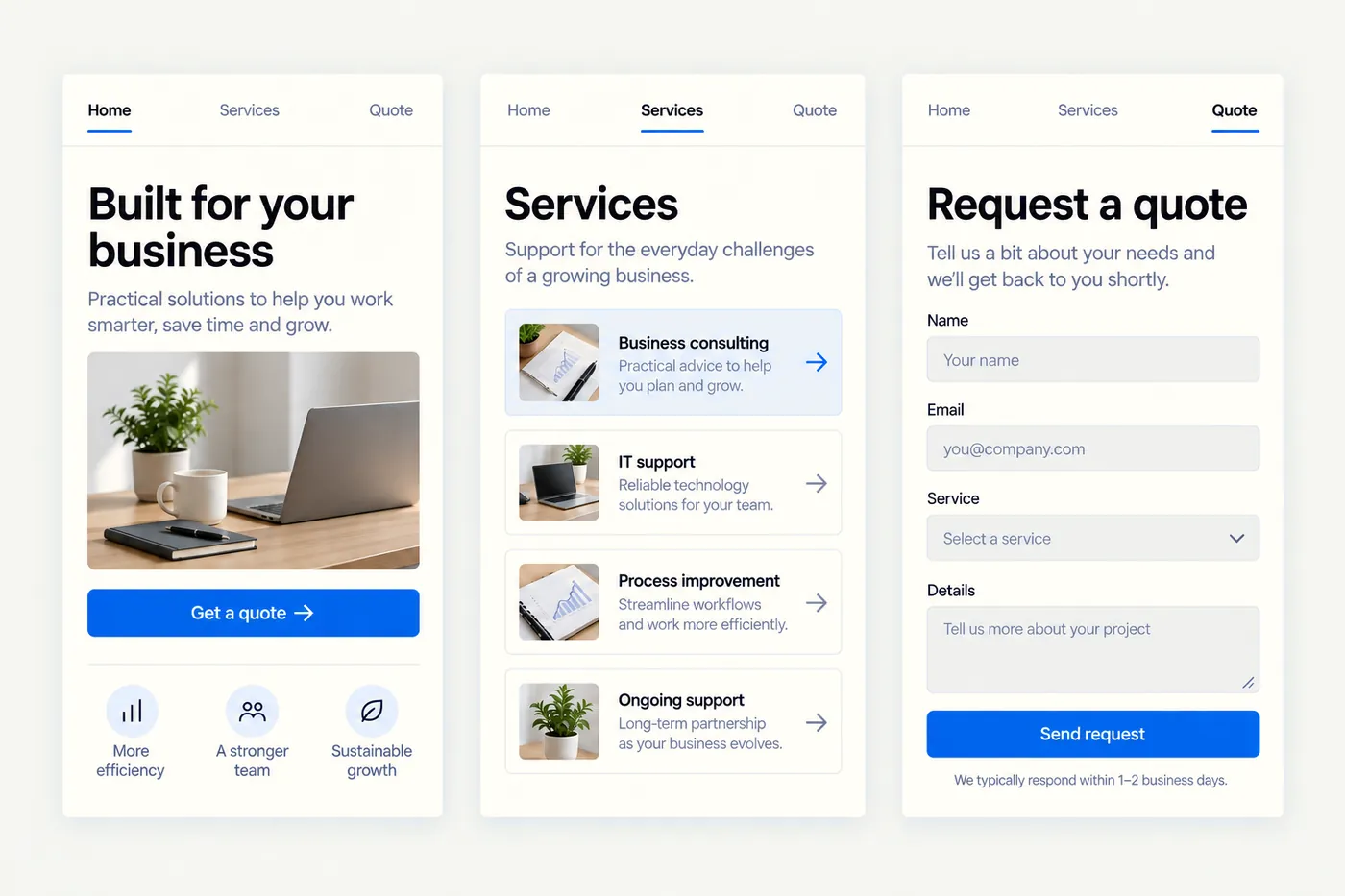
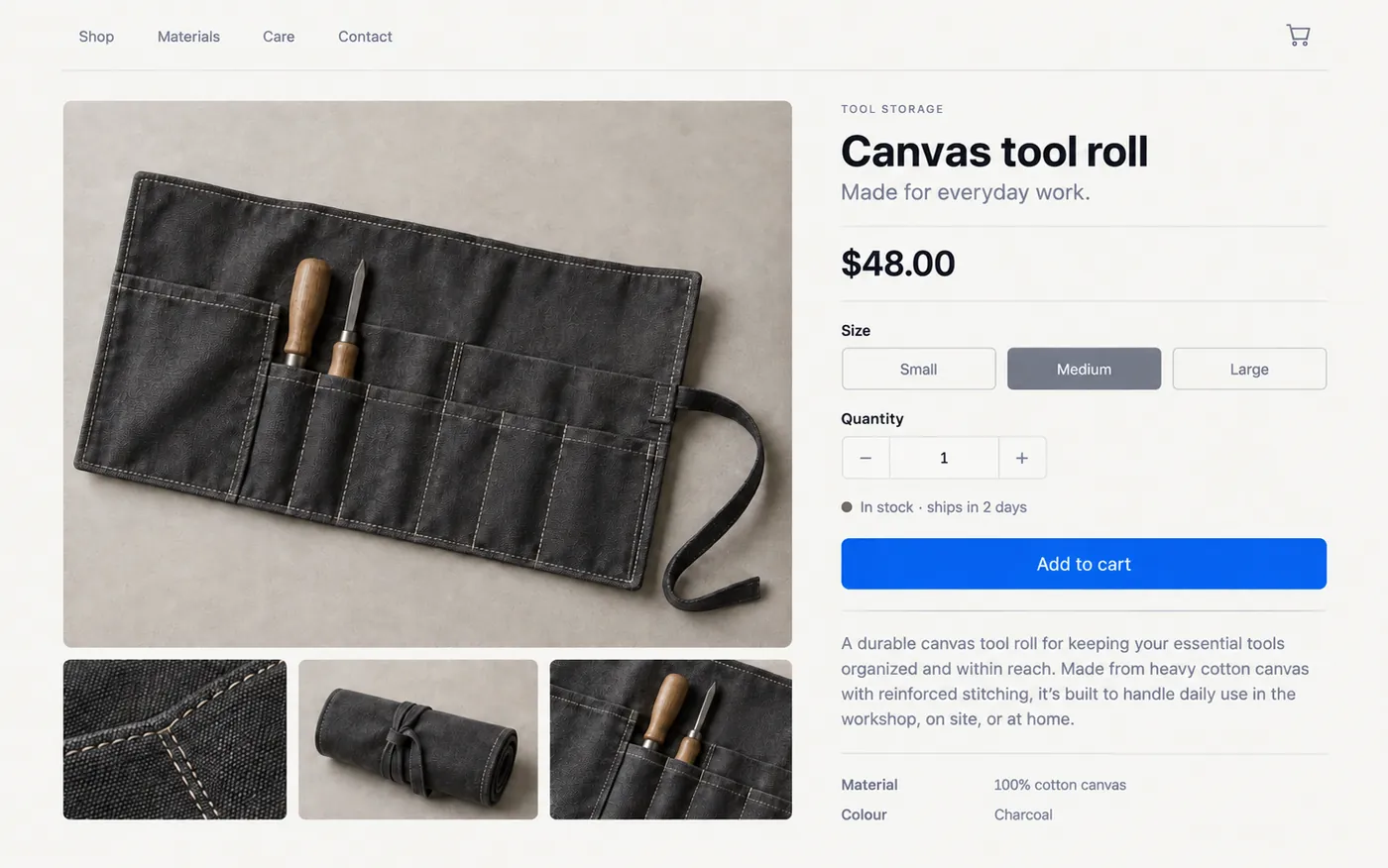
Three things worth checking on the site you already have.
Open it on your own phone
On mobile data, not office wi-fi. Count the seconds. If you get bored, so does the person deciding whether to call you.
Then try to find your price range in under fifteen seconds. Most owners can't find it on their own site.
Fill in your own form
Use a real address. See whether anything arrives, where it arrives, and how long it takes to be answered.
A surprising share of the sites I look at have a form that has been posting into nothing for months.
Search your own name
If your Google Business Profile is thin or wrong, that is usually worth more than a redesign and costs nothing to fix.
I will tell you if that is the whole job. It often is.
A platform site carries code it has to ship to every visitor whether that visitor needs it or not, so on a like-for-like page it will usually be the slower one. You are paying that speed for the ability to log in at eleven at night and change a price yourself.
For a lot of businesses that is the right trade and I will recommend it. But it should be a decision you made, not a surprise you discover when the page takes four seconds to load.
Hand-coded, or a platform?
Hand-coded when…
You want the fastest site you can have, you would rather text me a change than log into anything, and you do not want a third company altering its pricing or its terms underneath you. It will normally load faster than the same page on a builder, and there is no platform subscription — hosting is free on the plan I use, and you still pay for your domain.
A platform when…
You genuinely will edit it yourself, you sell products with changing stock, or you want a dashboard your staff already recognise. It costs a monthly fee and some speed, and for plenty of businesses that is clearly the better deal.
What I work in here
Questions about websites
Do I own the domain?
Yes, registered in your name on your card from the start. A domain held by an agency is the single most common way a small business ends up stuck, and I will not be the agency holding it.
Can you fix the site I already have?
Often, and it is usually cheaper than starting again. Send me the address and I will tell you honestly whether it is worth fixing, rebuilding, or leaving alone while the money goes somewhere it does more.
What about SEO?
The technical groundwork is part of every build: structure, titles, schema, speed, Google Business Profile, submission to Google and Bing. Ongoing content and link work is a separate arrangement I quote on request. Anyone promising you page one in thirty days is selling you something.
Will you write the text?
I draft it from a conversation with you and you correct it. Text written by somebody who has never spoken to you reads exactly like that, so it arrives as a draft to argue with rather than a finished thing to approve.
Is the website actually the problem?
Sometimes it is. Often the site is fine and the enquiries are dying somewhere after it. The audit follows the whole path, for free.