
Quotes in a spreadsheet. Orders in five places. I fix that.
Custom tools, integrations, AI and websites for owner-run businesses. Some fixes take an afternoon on software you already pay for. Some take a month. A free written audit tells you which.
Most businesses need two of these.
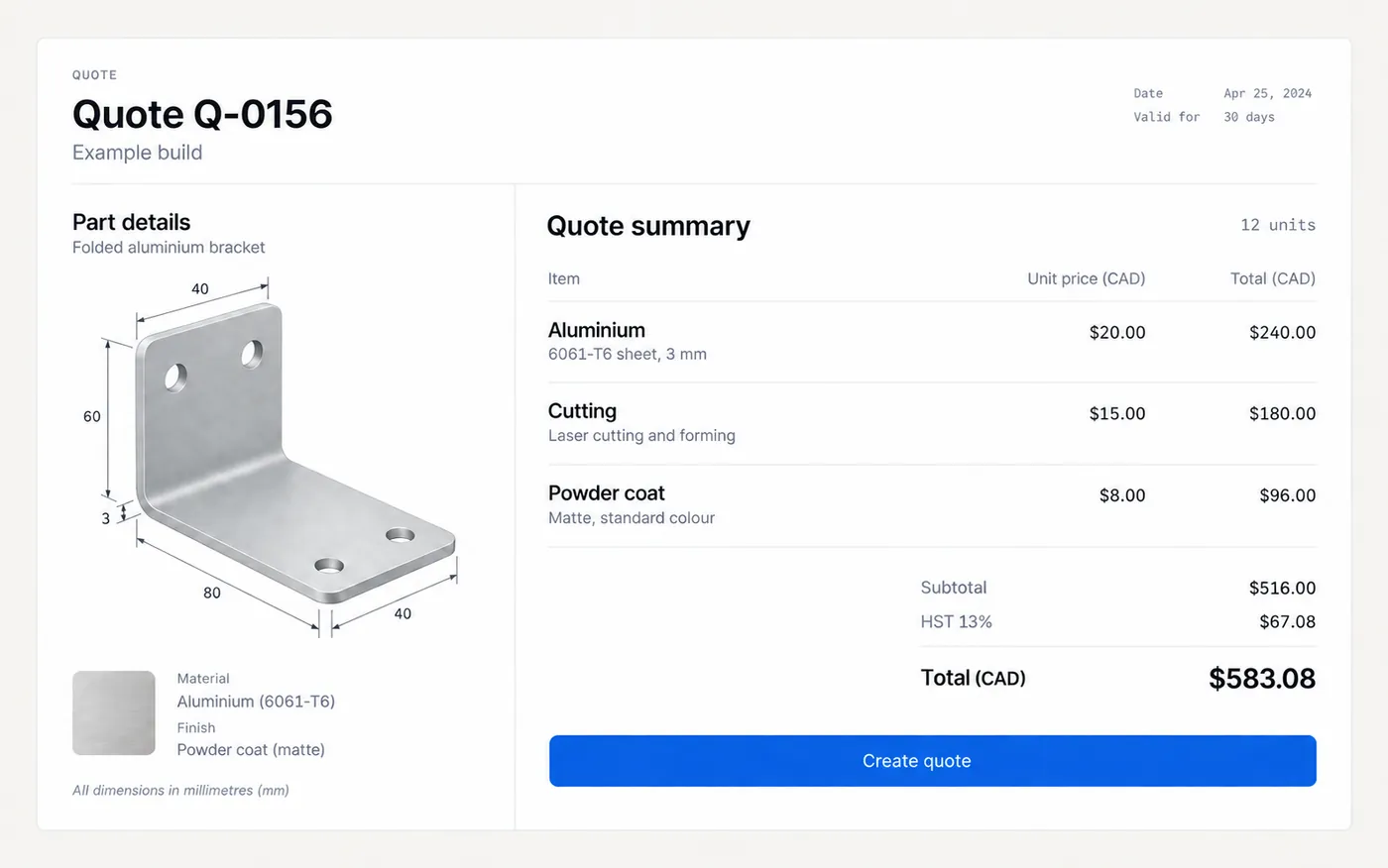
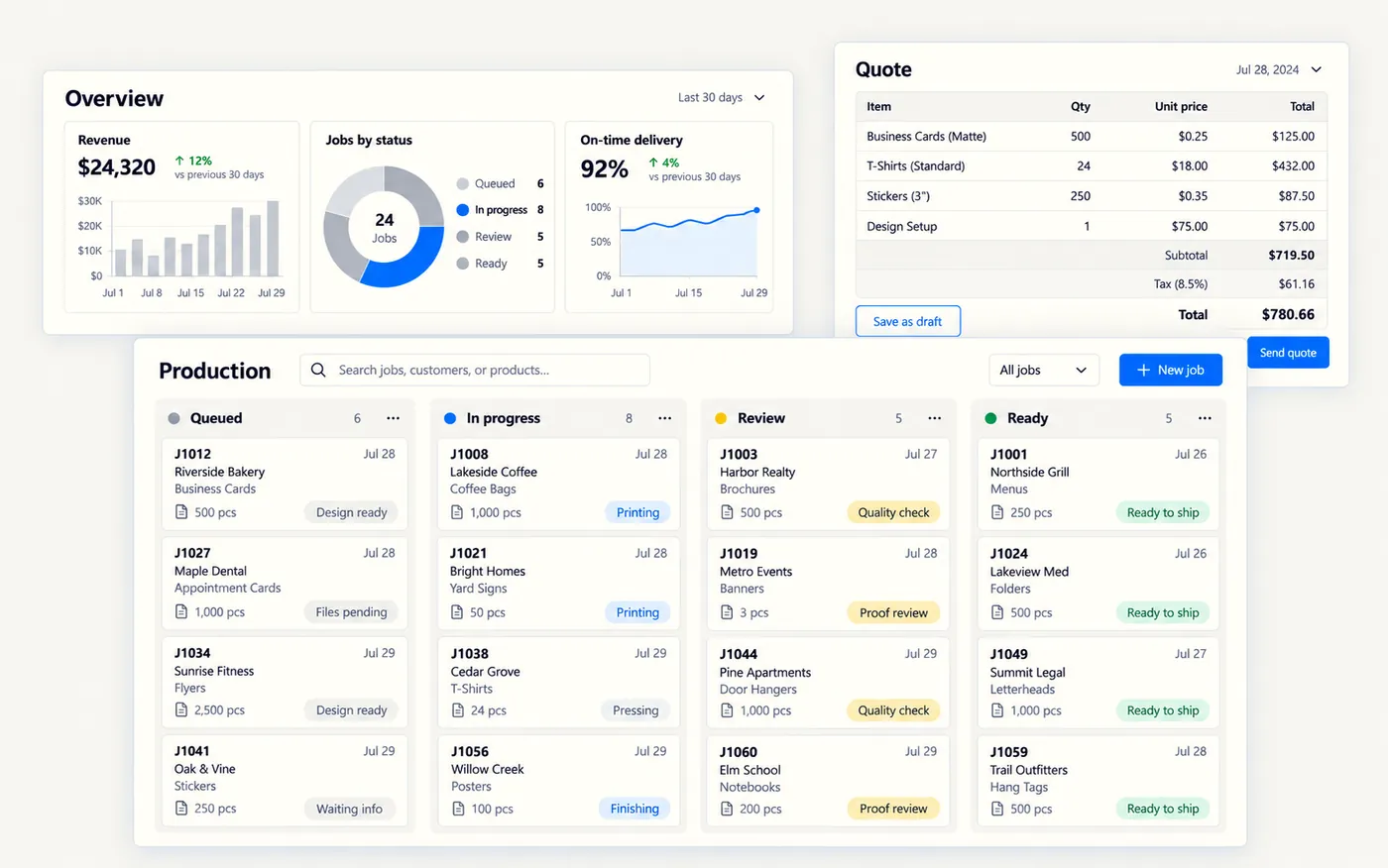
Custom business apps
Quoting, job boards, order intake, portals — shaped around your process, not a template's.
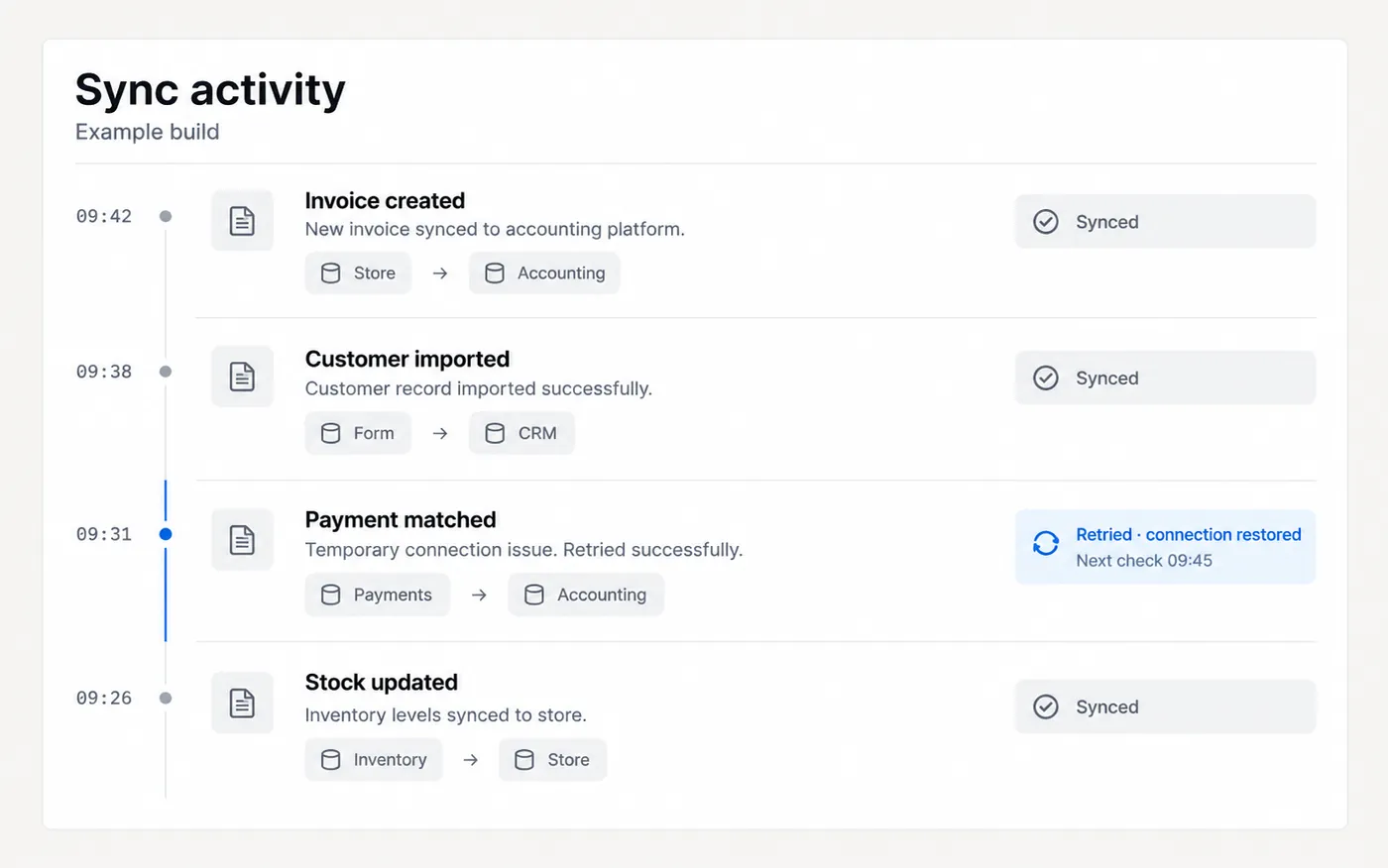
Integrations & automation
The software you already pay for, wired together, so nothing gets re-typed into QuickBooks.
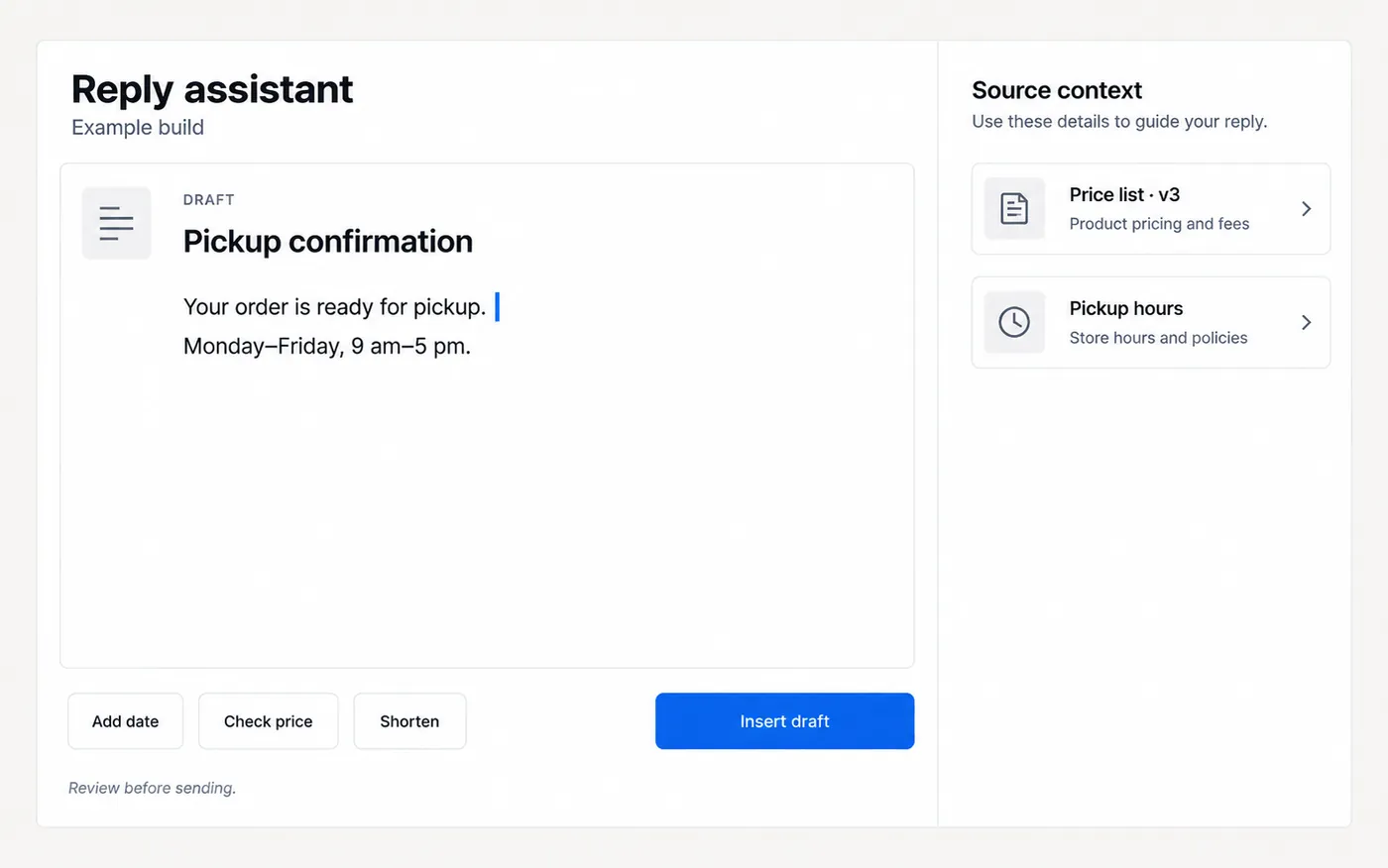
AI inside your business
Not a chatbot on the website. An assistant that knows your prices, templates and files.
Websites & online stores
Sites that answer the question the customer arrived with, including the price.
Follow-up & reviews
Enquiries answered, reminders that fire themselves, reviews nobody has to beg for.
Not sure which one?
Ten minutes on a form, a written answer in a week. That is what the audit is for.
You probably don't need custom software. A good share of what I get asked to build turns out to be a setting nobody switched on, two tools that were never connected, or a process that needs writing down before it needs automating.
When that is the answer, I say so. It costs me the project, and I would rather lose it than take your money for something you did not need.
What this looks like in a real week.
Take a Kingston shop that prints t-shirts and mugs. I have not worked for it — this is an illustration. Here is the order I would fix things in.
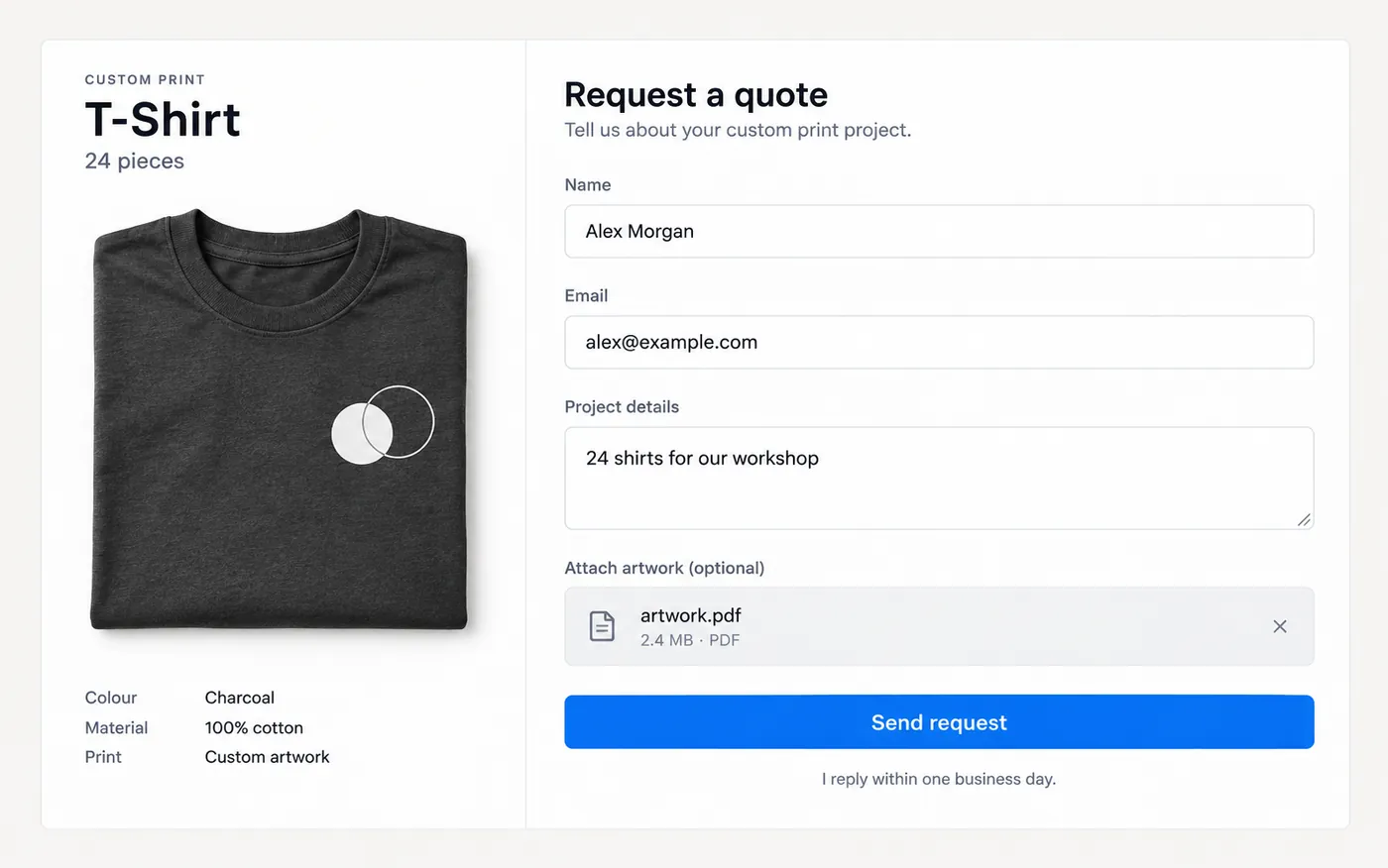
The customer prices the job
Every quote starts with a phone call. Half of them never get made.
A customiser on the site: pick the garment, upload the logo, see the price, send the request with the file attached.
WebsiteRequests land in one place
Email, Facebook, phone. Artwork gets lost in somebody's inbox.
One queue. Sizes, quantity, deadline, file — every job the same shape.
Custom or setupThe shop can see its own work
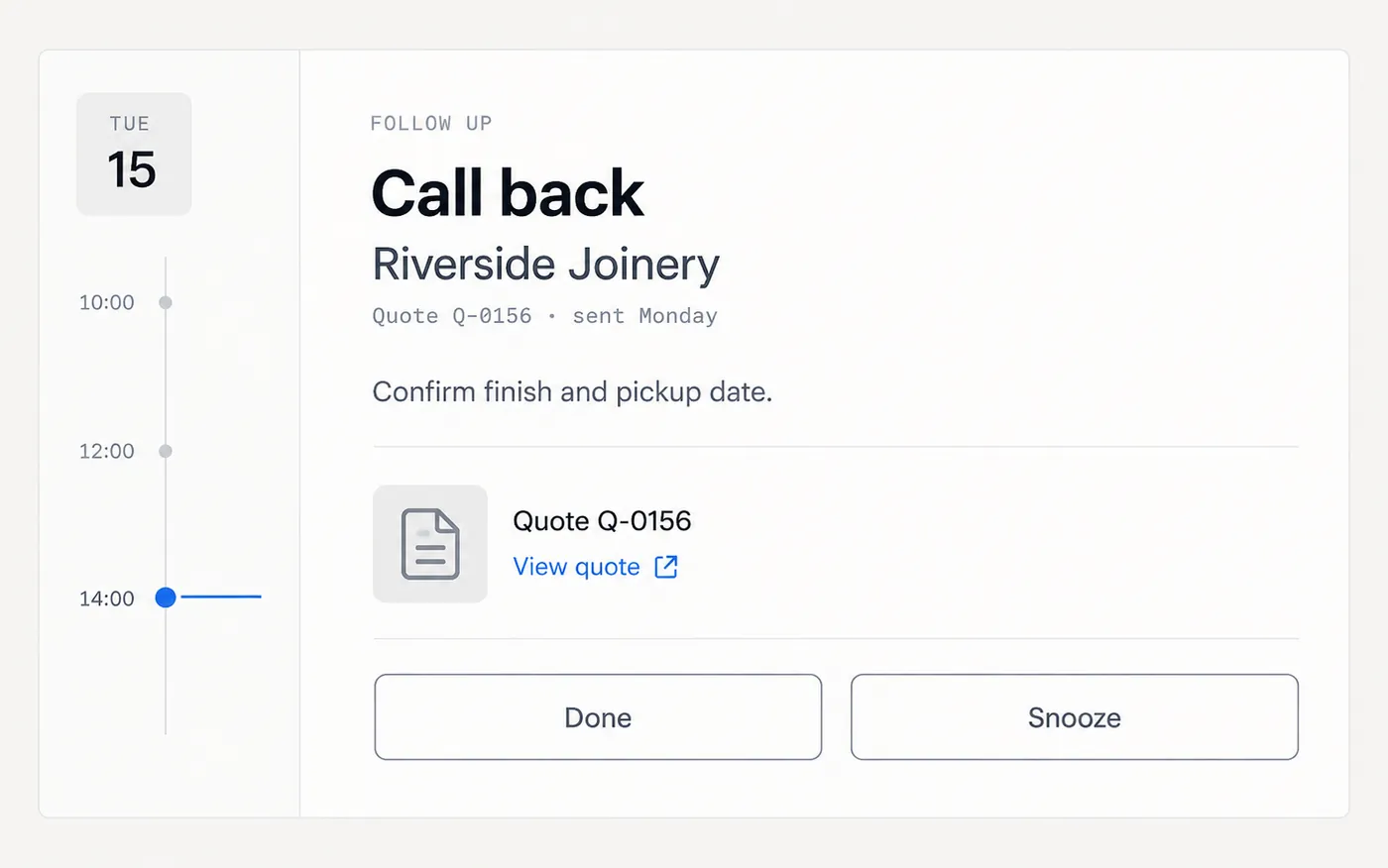
Who is doing what today is a conversation, every morning.
A board on the wall tablet: artwork, print, pack, ship. Each person moves their own card.
CustomCustomers stop phoning to ask
Every "is it ready yet" interrupts somebody at a press.
The customer gets a message when the job moves: received, in production, shipped.
AutomationReviews start arriving
Twelve Google reviews. The shop down the road has three hundred.
A request after every finished order, to every customer, with nothing offered in return. The only version Google's policy allows.
AutomationThe books keep themselves
Finished jobs get re-typed into QuickBooks on Fridays.
Customers and invoices sync on their own. The end of the month stops being an event.
Integration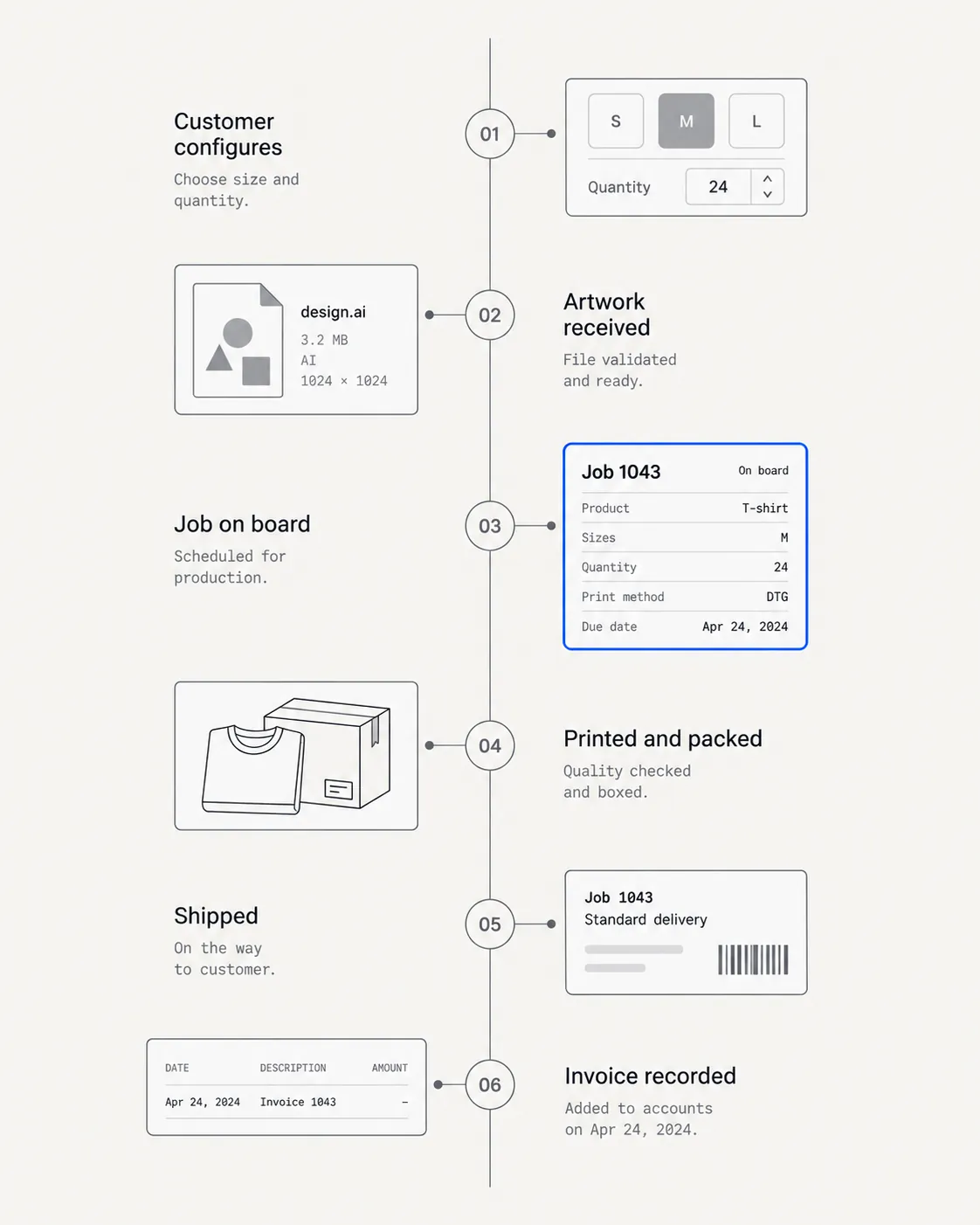
That is not one project. It is six small ones, and you can stop after any of them.
I run my own product, so I know what that costs.
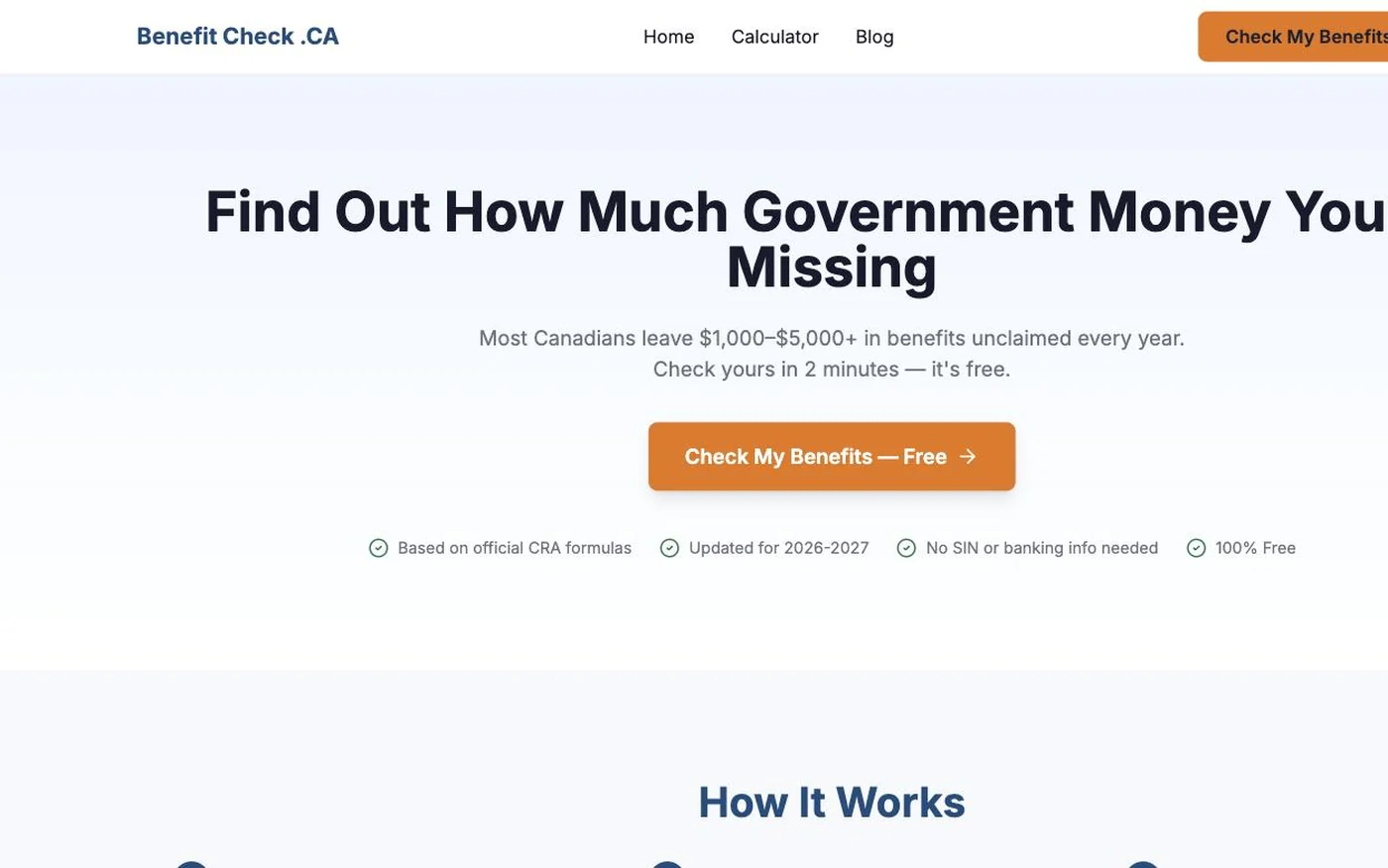
BenefitCheck.ca is mine. It tells people in Ontario which government benefits they are likely to qualify for. I wrote the eligibility rules, I take the payments, and I get the alert at eleven at night when a scheduled job stops.
Shipping software and living with it are different jobs. That is why what I build comes with logs you can read and alerts that fire.
One engineer, two projects at a time.
I'm Max Zimak. By day I run the internal systems at a manufacturer here in Kingston — the software their orders, quotes, customers, stock and accounting pass through. I built most of it and still maintain it weekly.
So the opinions here are not from reading. They are from watching a shop floor use software, break it, and tell me why.
- Who
- Max Zimak, working as Global Web Rise — a sole proprietorship, my name on the invoice
- Where
- Kingston, Ontario. In person from Belleville to Brockville, the rest of the province on a call
- Capacity
- Two client projects at a time, so nothing waits behind somebody else's emergency
- Ownership
- Code, data, domain and accounts in your name from day one
- Built on
- TypeScript, React, PostgreSQL, Supabase, Cloudflare — plus QuickBooks, Shopify and Stripe integrations
Find out what is actually slowing you down.
Fill in the form and you get back a written review of how your business runs, what to fix first, and what it costs. If the answer is that you don't need me, that is what it will say.
Two common questions
How much does this cost?
Connecting tools you already have starts around $400. A custom tool starts around $1,000 and rises with the people, roles and integrations involved. You get one fixed number and a date before anything starts, and it does not move. Full list on How it works.
Who owns it when it is done?
You do. Code, data, domain and every account are in your name from the first day. There is no version of this where leaving me costs you your software.