
Your process is the product. No app fits it.
Every shop I walk into has one screen it wishes existed. Usually it is the quote, the job list or the intake form. This is software built to the shape of the work you already do, small enough that people are using it the week it ships.
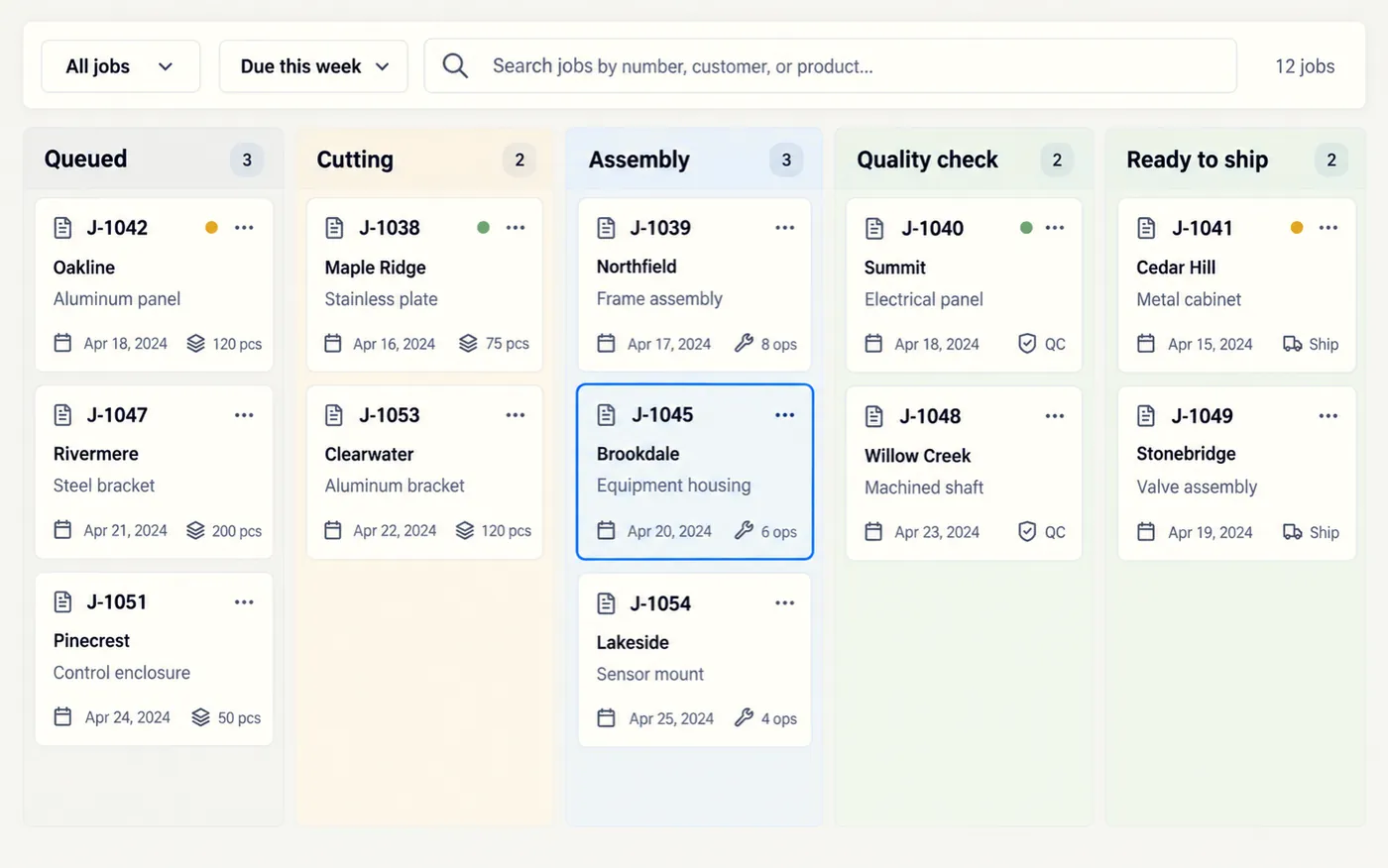
One tool that does one job properly.
Almost nobody needs a system. They need one screen that takes one piece of daily friction away, in the words they already use for the work. Build that, put it in front of people, and the next piece earns its place or it doesn't get built.
So the first version is narrow on purpose. It goes live, the shop floor finds the three things I got wrong, and those get fixed while everyone still cares.
- Typical first build
- One workflow, login with roles, one or two integrations
- Time to live
- 2–6 weeks
- What I need from you
- An hour walking me through how it works today, plus your price list or a handful of real jobs
- Starts at
- $1,000
- You own
- Code, data, domain, every account
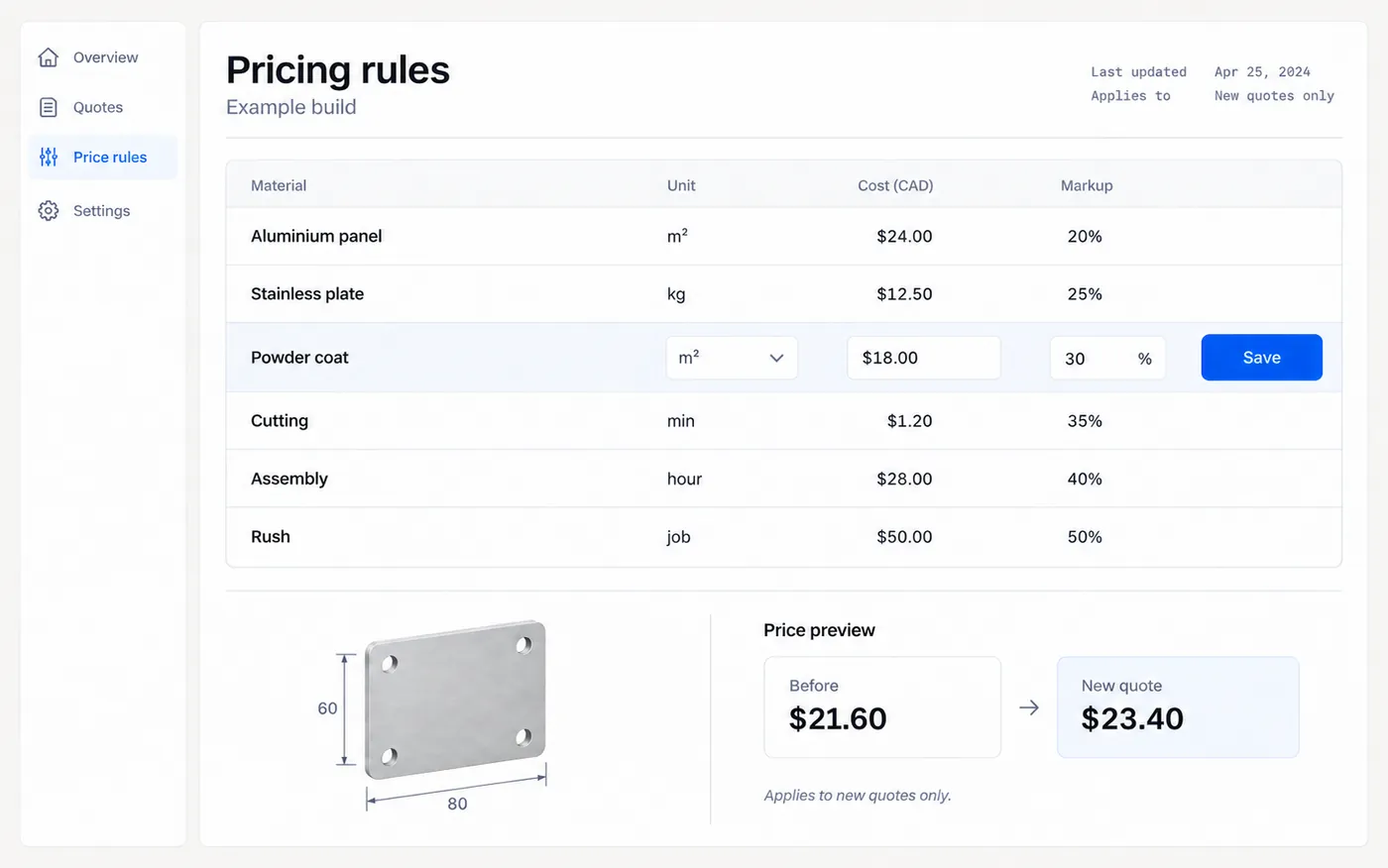
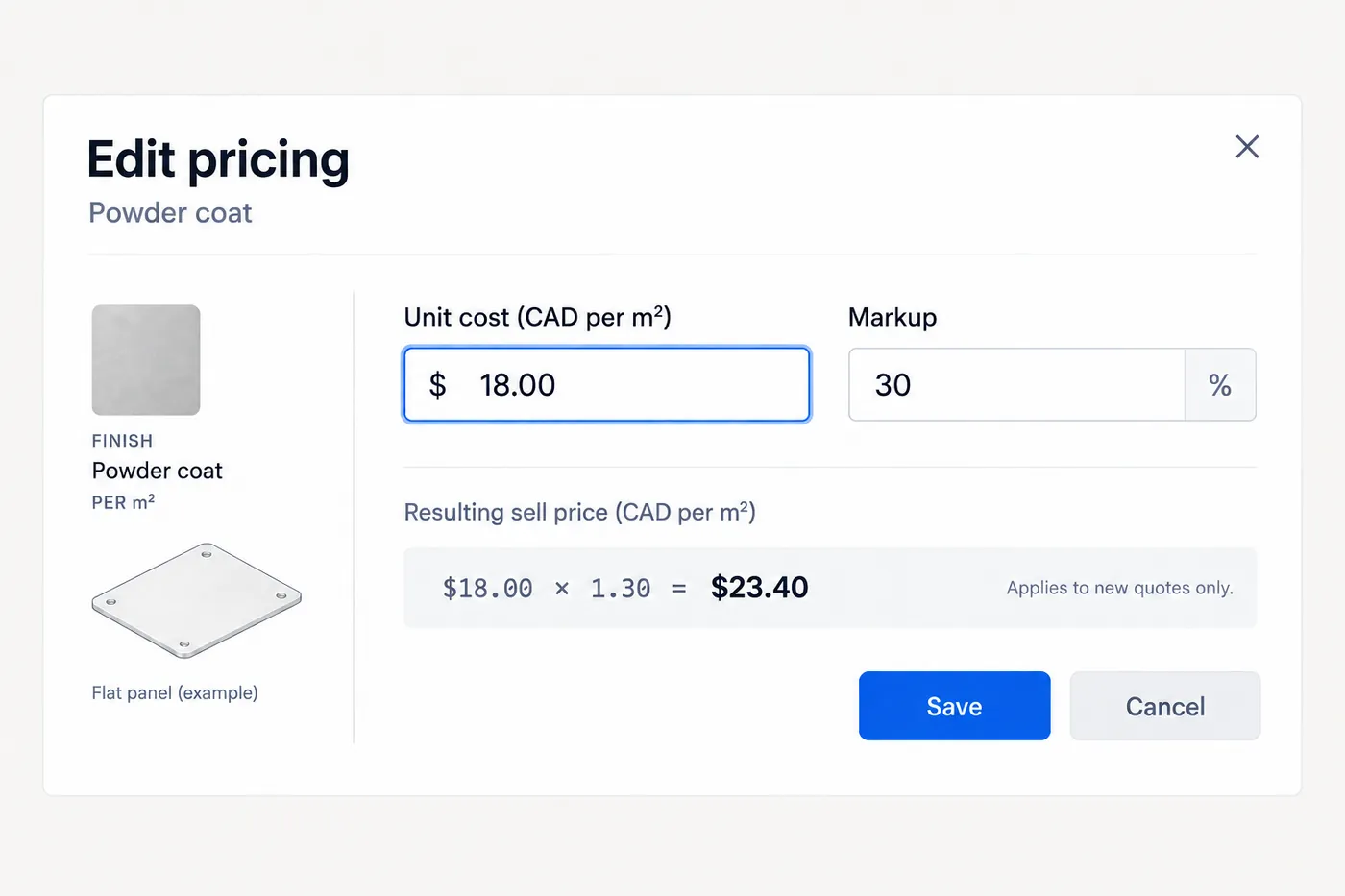
The pricing rules come out of one person's head.
Materials, sizes, finishes, labour, margin, and the awkward exceptions nobody has ever written down. They get entered once as configuration you can edit yourself, and after that every quote is priced the same way whether you built it or the new hire did.
- Your formulas, not a generic calculator's idea of them
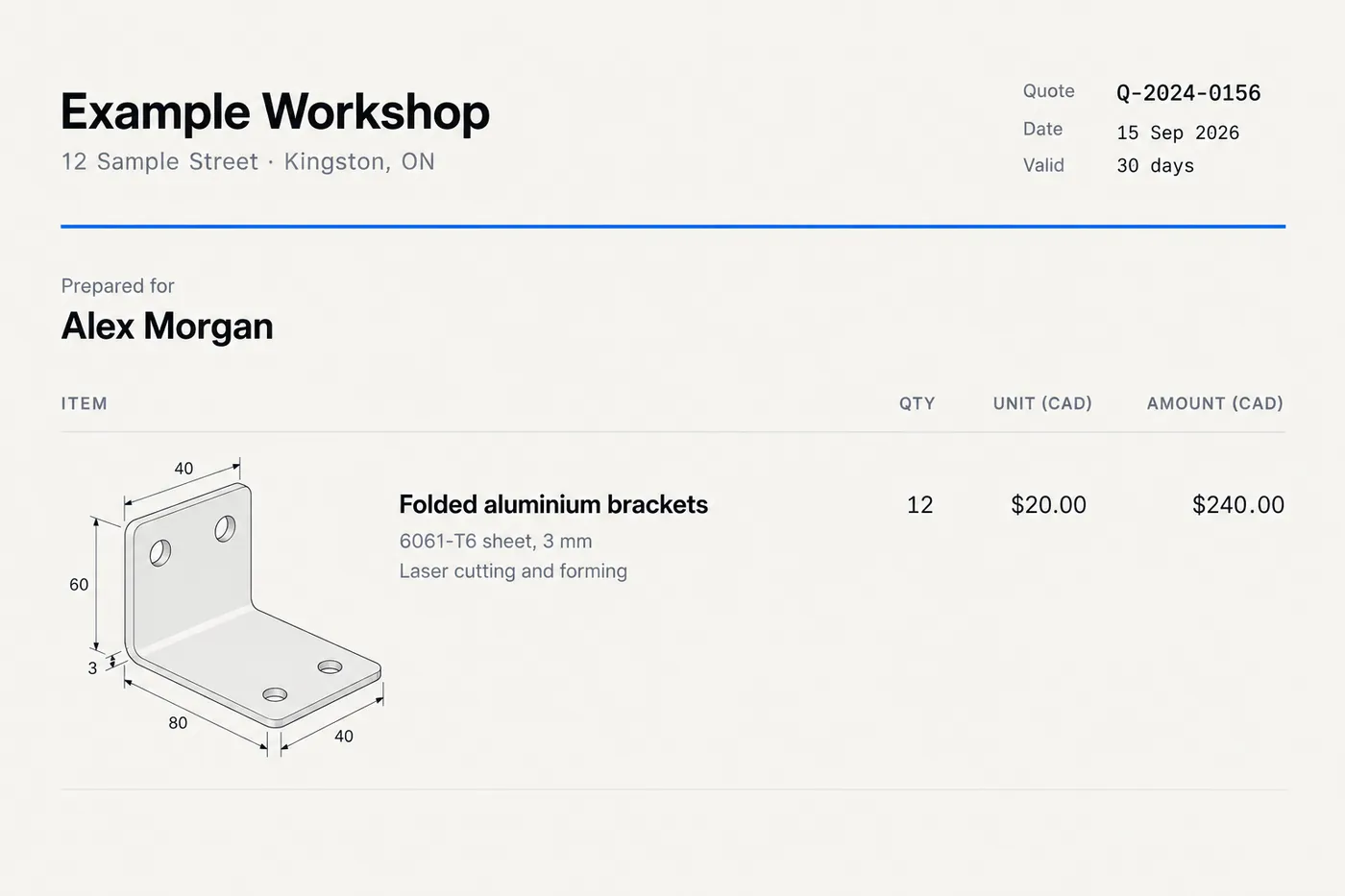
- A PDF to the customer in minutes instead of on Thursday
- An accepted quote becomes a job without being typed again
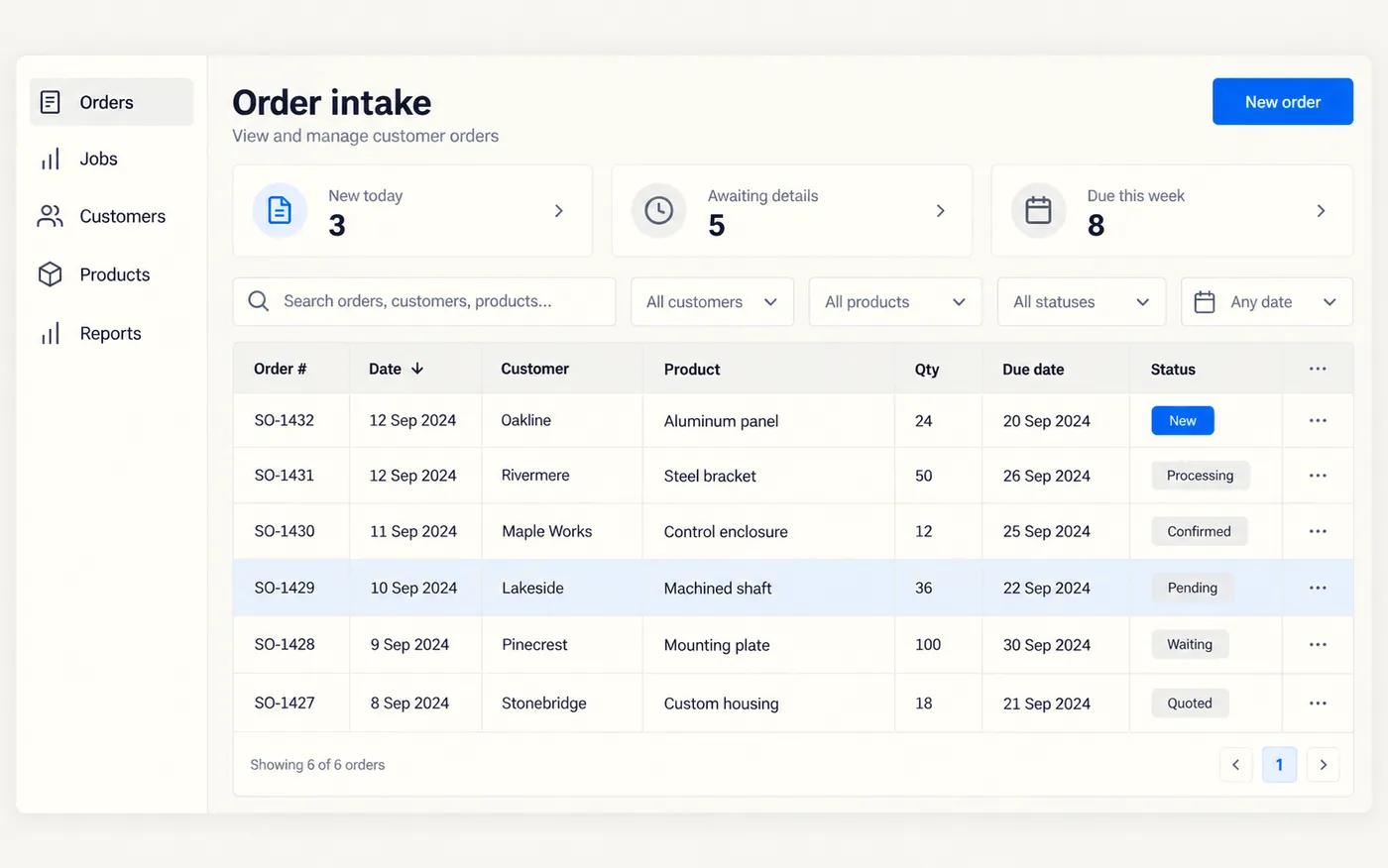
One queue instead of three inboxes.
Orders turn up by phone, email, Facebook and a form nobody checks. They end up in one list with the same fields, so nothing depends on somebody remembering a conversation from Tuesday.
- Every job the same shape: what, how many, by when, file attached
- A status the person answering the phone can read out
- Nothing living only in one person's inbox
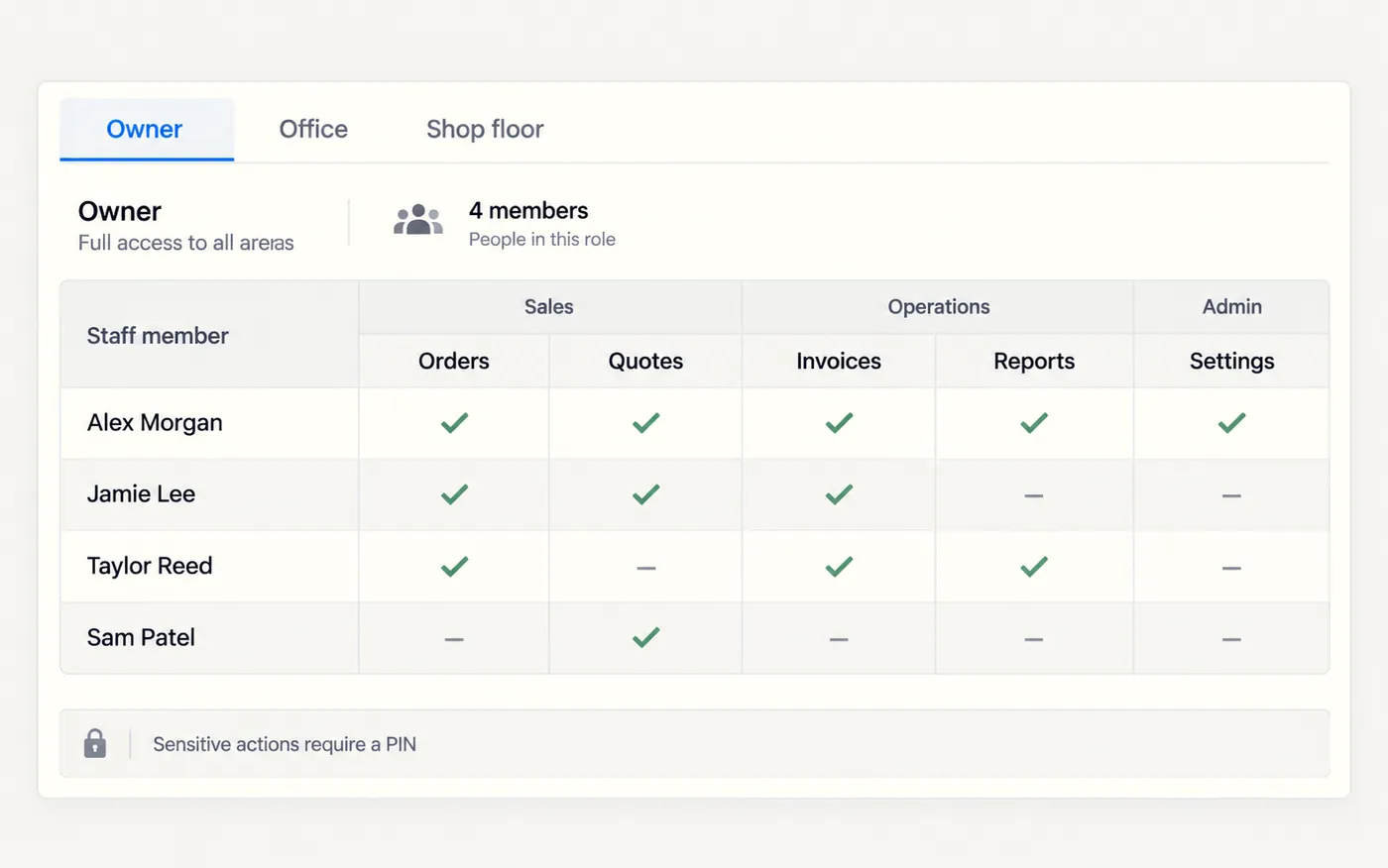
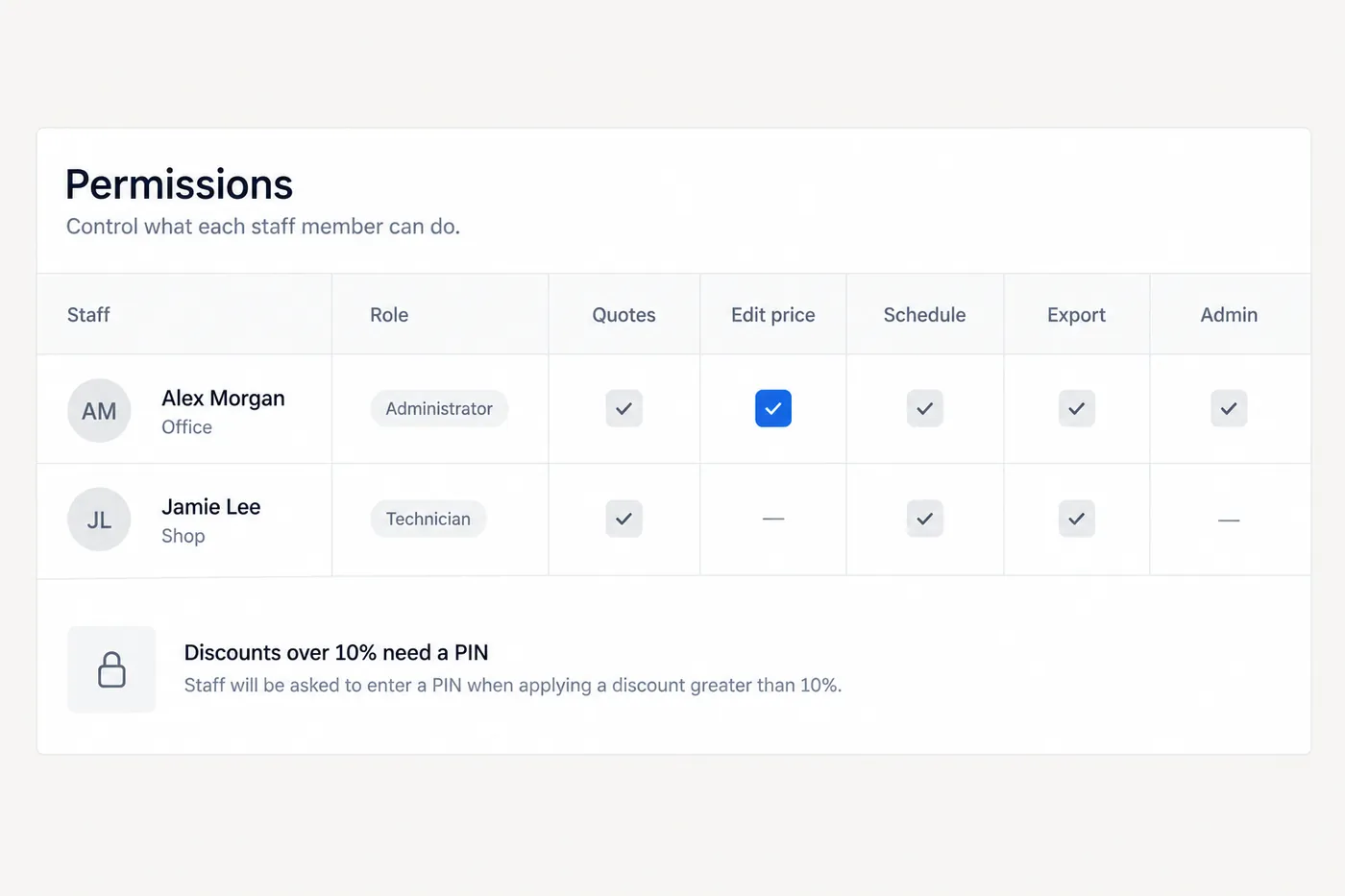
Not everybody needs the admin password.
Office staff, shop floor and the owner see different things. Discounts, deletions and anything to do with pay sit behind a PIN. Everything that matters is written to a log, because "who changed that" is a question that gets asked for real.
- Roles that match how the business is actually organised
- PIN-protected actions for the handful that need it
- An activity trail you can read back through
The parts people actually touch.
Custom software is the most expensive answer on this site and the one most people are wrongly sold. If a platform does ninety per cent of it and the missing ten is a preference, buy the platform.
The audit exists mostly to stop you building something you could have configured in an afternoon.
Custom, or something off the shelf?
Custom earns its price when…
Your quoting or production process is genuinely yours and is where the margin comes from. Or you have bought a product and now spend more time working around it than using it. Or you need two systems to behave in a way nobody sells as a product.
Keep the money when…
A platform already does nearly all of it. Or you are still changing the process every week and it has never been written down. Or the real bottleneck is one person who has not been asked to hand anything over. I will tell you which of those I think it is.
What I work in here
Questions I get about custom builds
What stops this turning into a six-month project?
The scope is written down before anything starts, and the first build is one workflow rather than a system. If something you ask for during the build makes it a different project, I tell you what it adds in time and money and you decide before I touch it.
What happens if you get hit by a bus?
A fair question for a one-person shop. Everything sits in your accounts, in technologies any developer knows, with written documentation and a recorded walkthrough. You could hand it to somebody else tomorrow without asking me for anything.
Can my team change things in it themselves?
Prices, options, stages, users and templates are built as configuration, so yes. Redesigning screens is my job, not something I hand you a page builder for — that trade is worth deciding at the start rather than resenting later.
Will you work with our existing developer or IT person?
Yes, and I have done handovers to other teams before, including writing the documentation they needed to take it over. If they are better placed to do the work, I will say that too.
Find out whether you need this at all.
The audit tells you whether a custom tool is worth it in your situation, and if it isn't, what to do instead. Free, in writing, no phone call.