
An hour to quote. It should be four minutes.
An illustration of what I build, not a client project. This is the shape a quoting tool takes in a workshop or a small manufacturer: the pricing rules written down once, then applied the same way whoever is at the desk.
If you asked me to build this
- Who it fits
- Workshops and small manufacturers with configurable work
- First version
- One product family, your real rules, PDF output
- Time to live
- 2–4 weeks
- Typical range
- $1,000 – $4,000, driven by how many rules there are
The range moves on the number of rules and exceptions, not on how the screen looks.
What quoting costs you, before and after.
One person is the pricing engine
- The sheet has rules in it that only one person fully understands
- When they are away, quotes stop or come out wrong
- Material costs go up and half the sheet gets updated
- The customer waits two days for a number a competitor gave in an hour
- Nobody can tell you what margin last month's quotes were written at
- A price change means finding every sheet that has the old number in it
The rules belong to the business
- Materials, sizes, finishes, labour and margin entered once, editable by you
- Any member of staff produces the same number for the same job
- A cost change is one field, applied everywhere from that moment
- The number is on the phone while the customer is still on it
- Every quote keeps the rule version it was priced with
- You can answer "why was that job priced like that" a year later
Most of the work is not the software. It is getting the rules out of somebody's head in a form that survives them going on holiday — and that person is usually the owner, which is why this project needs an hour of their time and not an hour of an assistant's.
The parts that matter
- Pricing rules
- Materials, sizes, finishes, labour and margin as configuration rather than code, so you change them without me
- The awkward cases
- Quantity breaks, rush charges, the discount you always give the hockey club — written down instead of remembered
- Live total
- The number moves as options change, so the conversation can happen while the customer is on the phone
- Customer PDF
- A quote in your branding, with line items, tax, lead time and terms
- Follow-up
- Sent quotes tracked, with a reminder when nobody has replied
- Becomes a job
- An accepted quote turns into a job on the board without anyone re-typing it
The screen you use, and the page they get.
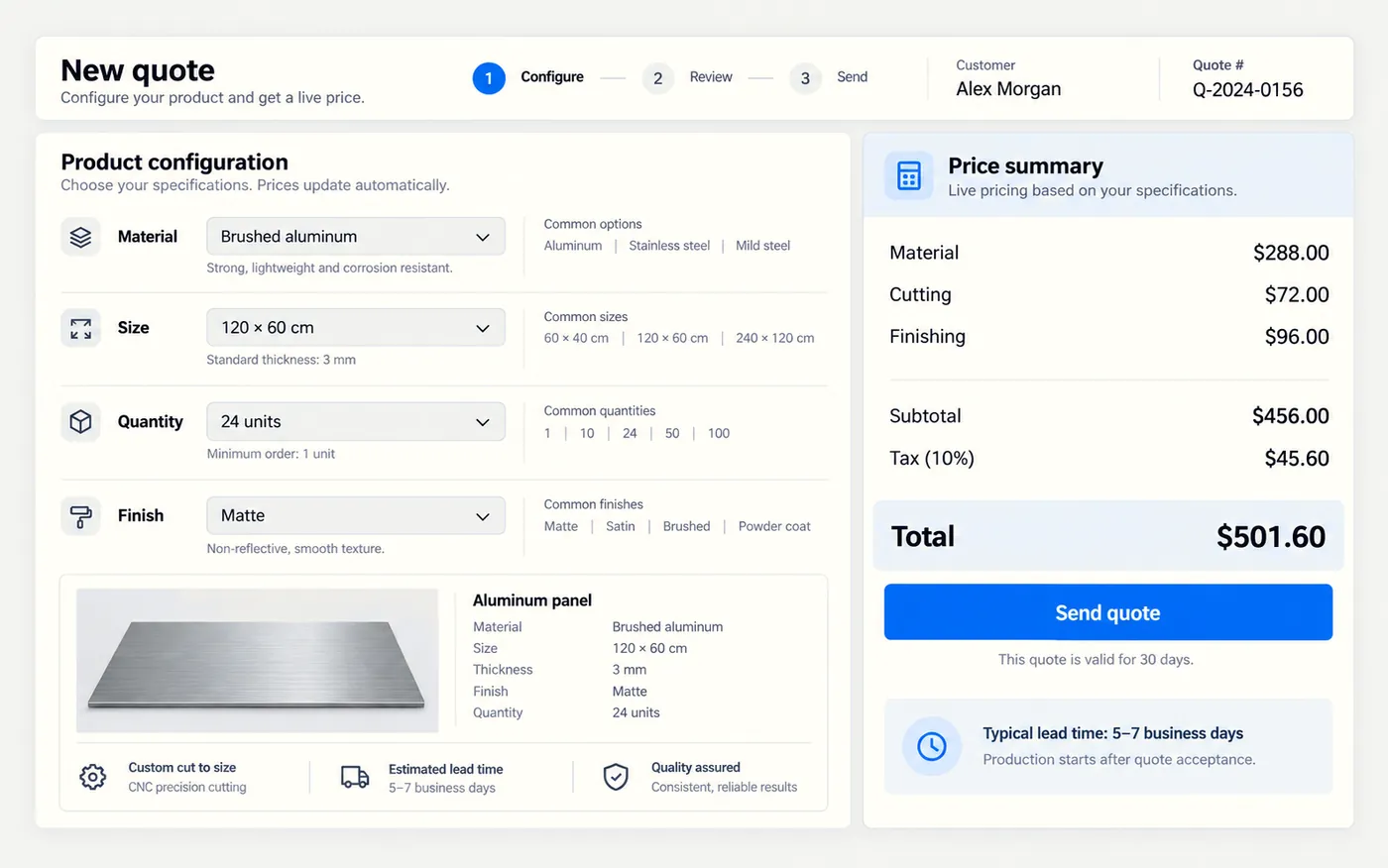
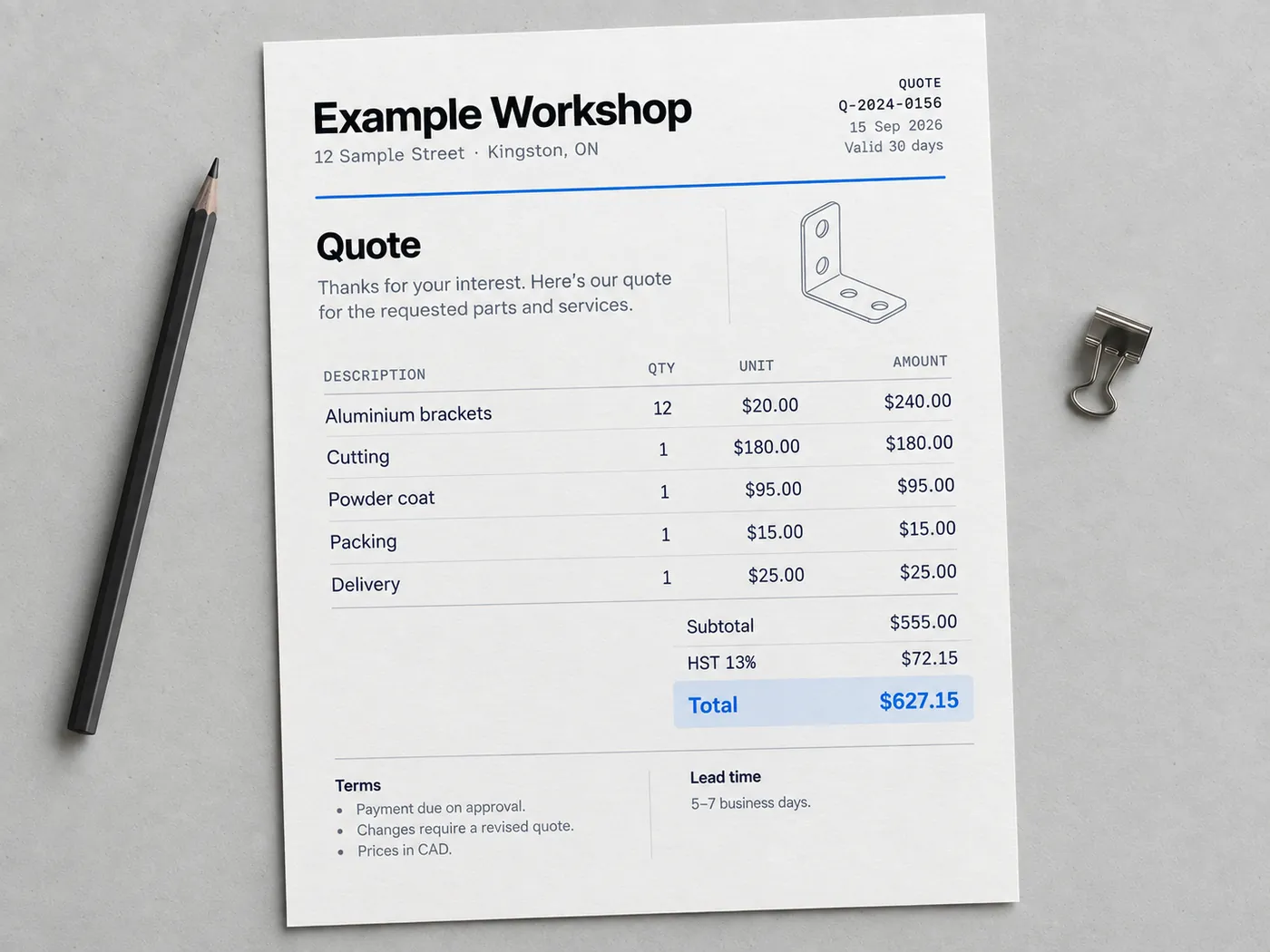
Every quoting project that fails does it the same way: somebody tries to model every product the business has ever made before anything ships.
So the first version covers one product family — the one you sell most of. It goes live, real quotes go through it, and the second family gets added once people can tell you what is wrong with the first.
Roughly what a build like this involves.
An hour with whoever currently writes the quotes, and a copy of the spreadsheet. That conversation is the project. The software is the easy half.
If you already run something that prices jobs and it is nearly right, say so — fixing that is usually cheaper than replacing it, and I will tell you if that is the case.
- From you
- One hour, plus your current spreadsheet or a few real quotes
- From me
- Rules mapped, tool built, PDF designed, walkthrough recorded
- Live in
- 2–4 weeks
- Starts at
- $1,000
Would this fix your week?
Tell me how you quote today and I will tell you, in writing and for free, whether this is worth building for you and what it would cost.