
The whiteboard, but it survives the day.
An illustration of what I build, not a client project. This is what a job board looks like when it is designed for the people doing the work rather than for a manager who is not in the building.
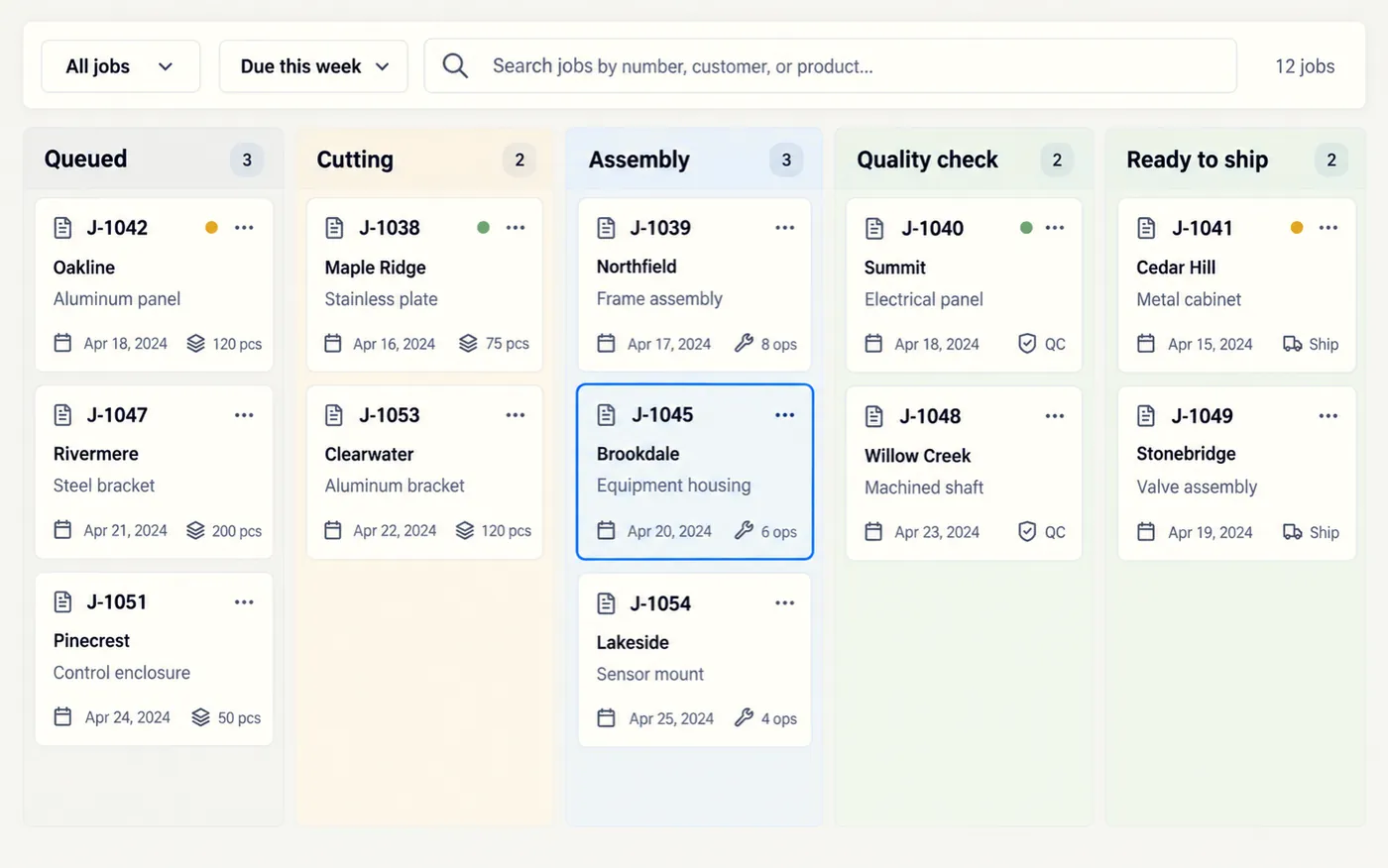
Every morning starts with the same conversation.
Who is on what. What is late. What came in overnight. In most shops that is answered by walking around, and the answer stops existing the moment everyone goes home. So on Friday nobody can say why Tuesday went wrong.
The board has to be faster than asking, or it will not get used. That is the entire design problem, and it is why most of these fail.
- Who it fits
- Shops where work moves through stages and more than two people touch it
- First version
- Your stages, your job fields, on the tablet you already have
- Time to live
- 2–5 weeks
- Typical range
- $1,500 – $6,000, driven by people and permissions
The parts that matter
- Your stages
- Columns named after what happens in your shop, in the words your staff already use for it
- Built for a tablet
- Big targets, high contrast, and arrows instead of drag-and-drop, because dragging with gloves on does not work
- Due dates that mean something
- Derived from your real lead times, with late work impossible to miss from across the room
- Limits per stage
- A warning when too much piles up in one place. A warning, never a block — the shop decides
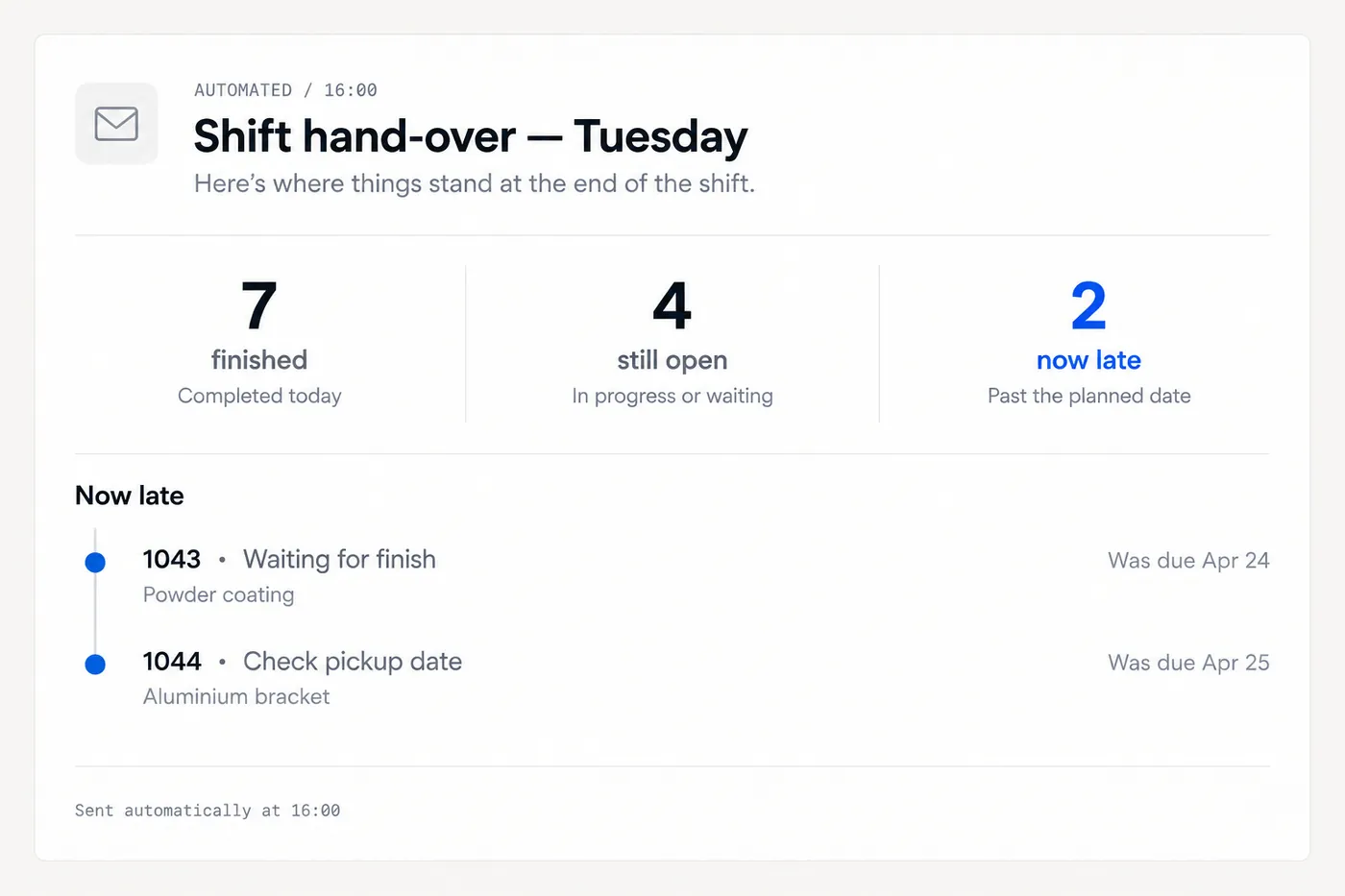
- Hand-over report
- A summary that sends itself at shift change, so the next crew is not guessing
- History
- Every move recorded, so Friday's question has an answer on Monday
Three things that decide whether it gets used.
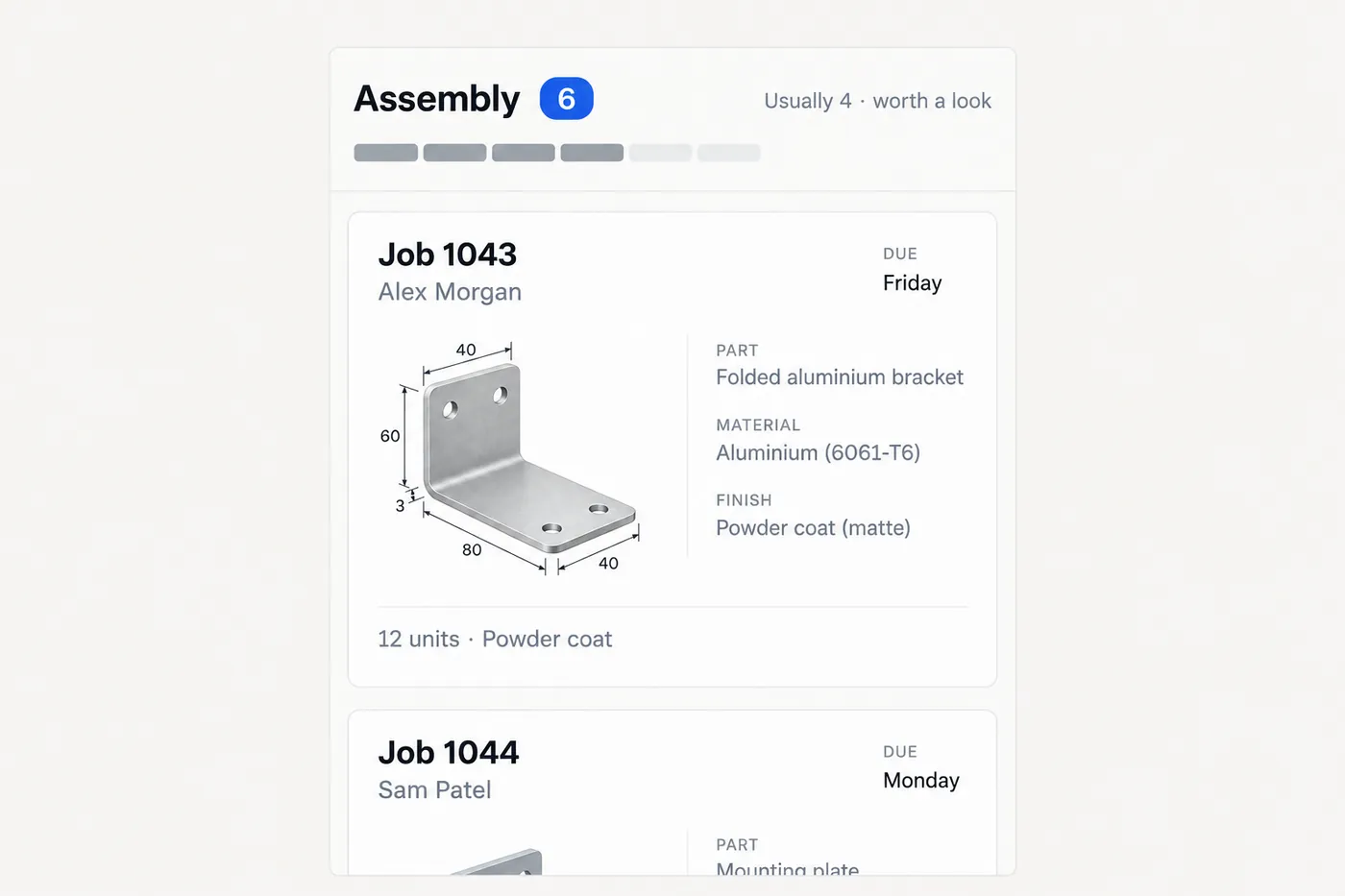
A board with eleven columns and twenty fields gets abandoned in a fortnight. Four columns that are correct get used for years.
So I will push back on fields. Every one you add is a thing somebody has to fill in at the end of a shift, and the ones that get skipped are the ones that make the whole board untrustworthy.
Roughly what a build like this involves.
Half a day watching how work actually moves — always different from how it is described — and a list of the fields people genuinely care about.
Then a first version narrow enough to go on the wall within a few weeks, and two visits after that to fix what the shop floor tells you is wrong. Those two visits are the part that decides whether it survives.
- From you
- Half a day on site or a walkthrough call, plus a list of stages
- From me
- Board built, tablet layout tested, hand-over report set up, walkthrough recorded
- Live in
- 2–5 weeks
- Starts at
- $1,500
What people ask before putting one on the wall
What if the wi-fi drops in the shop?
The board keeps showing what it last loaded and tells you it is stale rather than silently lying. Moves made while it is offline queue up and go through when the connection returns. If your shop has genuinely bad coverage, say so early — it changes what I build and sometimes it means fixing the coverage first.
Will the shop floor actually use it?
Only if it is faster than shouting across the room, which is why the layout gets tested on the actual tablet, in the actual light, before anything else is built. If people are still using the whiteboard a month later, the board is wrong and I would want to come and watch why.
Can the office see it without walking out there?
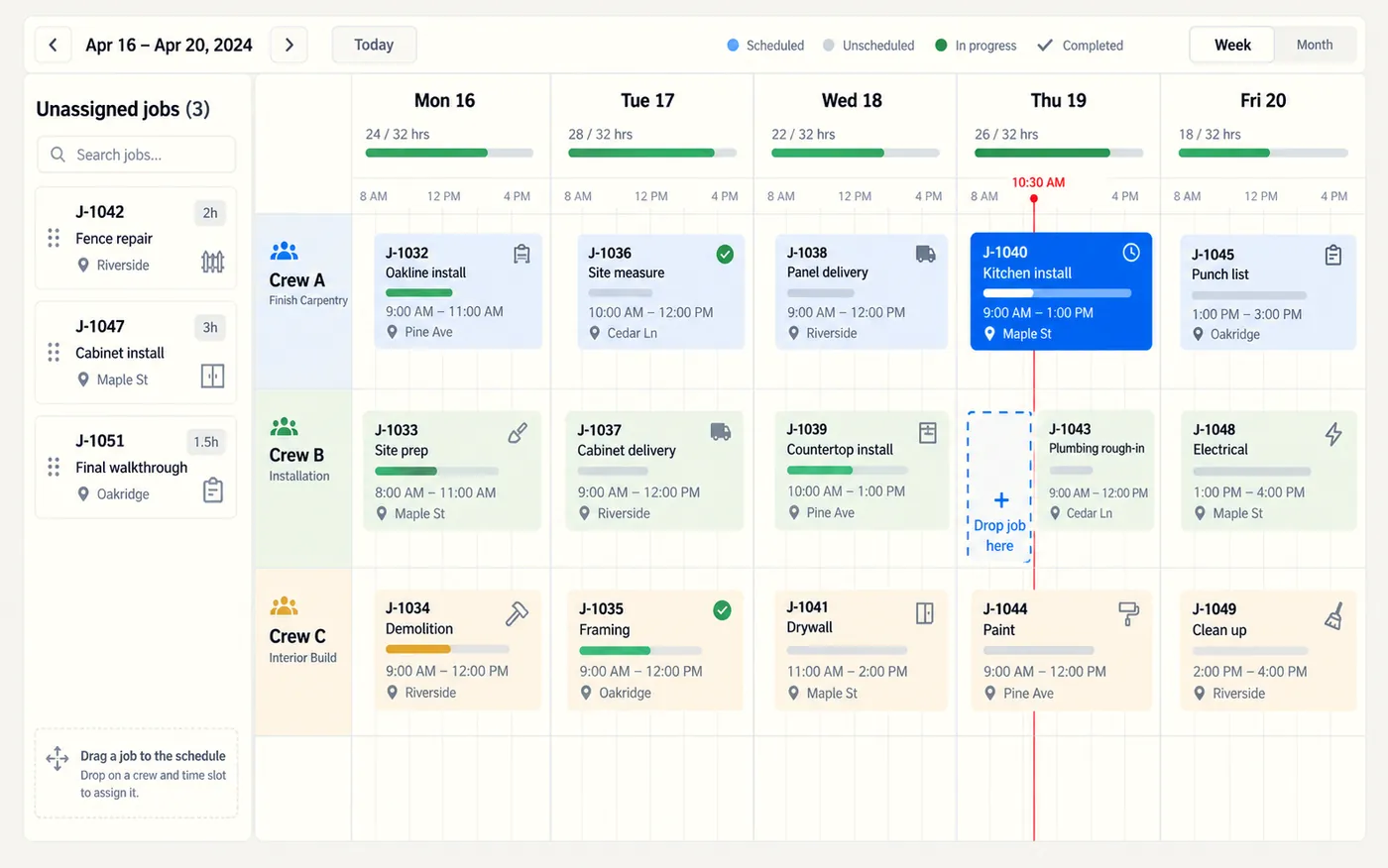
Yes, and that is usually the second thing that gets asked for. Same data, a denser layout for a desk, and the office view can show things the shop floor does not need — customer name, margin, whether the deposit landed.
Is the whiteboard the bottleneck?
Tell me how work moves through your shop and I will say, in writing and for free, whether this is worth building and what it would cost.